


When homeowners begin planning a renovation or building project, one of the biggest decisions they face is choosing the right material. Flooring, cabinetry and architectural details are significant investments.
That’s one reason oak wood has remained such a trusted choice for generations. Oak has a reputation for reliability, strength and timeless character. The secret lies in its high density and natural longevity. These qualities make it a dependable option for homeowners, builders, designers and architects who want materials that will last.
Below, we explore a few interesting facts about oak wood and its uses, so you can see why this hardwood remains a popular choice for both residential and commercial spaces.
Understanding Oak’s High Density
One of the most important characteristics of oak is its high density. Density refers to how tightly the wood fibers are packed together.
For homeowners and builders, density translates into resistance to dents and daily wear. The dense grain structure of oak helps it withstand the everyday bumps and pressure that flooring and furniture experience. It also helps with reliable durability in busy homes. In areas with regular foot traffic, like living rooms, kitchens and hallways, oak flooring tends to maintain its appearance for years.
Longevity You Can Count on
In nature, oak trees can live for hundreds of years. The wood harvested from these trees carries many of the same qualities that enable the trees to endure.
When homeowners choose oak, they are choosing something that can become part of the long-term story of their home. This longevity comes with the following benefits:
- Generational durability: Properly maintained oak flooring can remain beautiful for decades and may even last through multiple home renovations.
- Historical reliability: Many historic buildings still contain original oak beams or flooring, demonstrating how well the material holds up over time.
- Timeless design value: Oak doesn’t easily fall out of style. Its natural grain patterns and warm tones have remained popular across many architectural eras.
Exploring the Different Types of Oak
When it comes to construction and woodworking in North America, two types of oak stand out above the rest. These are strong, durable hardwoods, but each has unique characteristics that make it appealing for different reasons.
1. White Oaks: Superior Water Resistance and Stability
White oak is widely appreciated for its durability and natural resistance to moisture. This quality comes from its unique cellular structure.
For homeowners and builders, this structure provides the following advantages:
- Closed grain structure: The pores in white oak are naturally sealed, which helps limit moisture absorption.
- Greater stability in changing conditions: Because water doesn’t penetrate the wood as easily, white oak tends to remain stable even when humidity levels fluctuate.
- Refined, neutral appearance: White oak typically features soft brown tones and a subtle grain pattern that works well with both traditional and modern interior styles.
2. Red Oaks: Warmth, Tradition and Open Grain
Red oak has long been a favorite hardwood in American homes. Its distinctive grain pattern and warm undertones give it a classic appearance that many homeowners recognize immediately.
While its structure differs slightly from white oak, red oak remains an extremely durable hardwood for interior applications.
- Pronounced grain pattern: Red oak’s open grain structure creates bold, visible wood patterns that add character to flooring and furniture.
- Warm color tones: Many red oak boards feature subtle reddish or pinkish undertones that create warmth in interior spaces.
- Excellent workability: Red oak machines and sands well, making it a practical option for flooring, cabinetry and millwork.
For homeowners who appreciate traditional hardwood aesthetics, red oak often delivers the familiar look they’re seeking.

Popular Applications and Uses for Oak Wood
Since oak combines durability and visual appeal, it’s become one of the most versatile hardwoods available. It appears in many types of construction and design projects where longevity and natural beauty are priorities.
Wide-Plank Hardwood Flooring
One of the most common uses for oak is hardwood flooring. Oak’s density makes it well-suited for floors that must handle everyday wear. Wide-plank oak flooring, in particular, has become increasingly popular because it highlights the wood’s natural beauty.
- Durability for high-traffic spaces: Oak flooring can hold up well in busy areas of the home, like entryways, kitchen and family rooms.
- Distinct natural character: Wider planks allow the grain patterns of the wood to stand out, creating a rich and inviting surface.
- Health-friendly surfaces: Hardwood flooring is easier to clean than many synthetic materials and doesn’t trap dust or allergens the way carpets often do.
Reclaimed Oak: Bringing History Into Your Home
Another fascinating use for oak is reclaimed oak flooring. Reclaimed wood comes from historic structures like barns, factories, tunnels and early American buildings. Instead of discarding this material, artisans carefully repurpose it for modern use.
- Preserving a piece of the past: Reclaimed oak often comes from old-growth lumber harvested generations ago, giving it unique character and depth.
- Natural aging and patina: Over time, reclaimed boards develop distinctive markings, grain variation and natural checks that add visual interest.
- Exceptional stability: Because reclaimed wood has already experienced decades of natural drying and environmental exposure, it often performs very well in modern homes.
Cabinetry, Furniture and Millwork
Oak’s strength and versatility also make it a favorite for custom woodwork. Beyond flooring, it appears in many interior design elements that benefit from durability and natural beauty.
Common uses include:
- Custom cabinetry: Oak’s strong grain structure and durability make it a reliable option for kitchen cabinets and built-in storage.
- Furniture construction: Tables, shelving and bed frames made from oak offer both strength and timeless design.
- Architectural millwork: Trim, beams and decorative wood accents often use oak to bring warmth and structure to interior spaces.
Since oak works well with a wide range of finishes and styles, it remains one of the most adaptable hardwoods available for both traditional and contemporary designs.
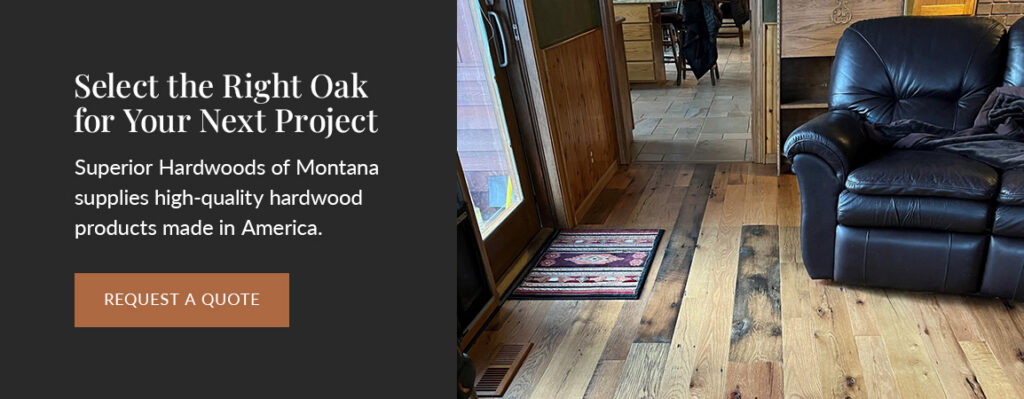
Select the Right Oak for Your Next Project
Choosing materials for a home renovation or building project often comes down to balancing visual appeal, durability and long-term value. Oak wood checks all of those boxes. For homeowners, builders and designers exploring oak flooring options, experienced guidance can make all the difference.
Superior Hardwoods of Montana supplies high-quality hardwood products made in America. With a large inventory of quality flooring and decades of product knowledge, our team is committed to helping you find materials that will last for years to come. Request a free quote today to start your next project.